How Can I Do More As A Man?

Fix the culture.
Not women.

A practical training programme that moves men from passive bystanders to active disruptors of everyday harm. Not guilt, not blame - just the tools to change the spaces you already occupy.

// Media

Course materials.

Video overview and deep-dive audio sessions exploring the full HASSL framework.

Course overview - 8 min 21 sec - NotebookLM generated

deep dive 20:42

Session 1: Framework & Tactics

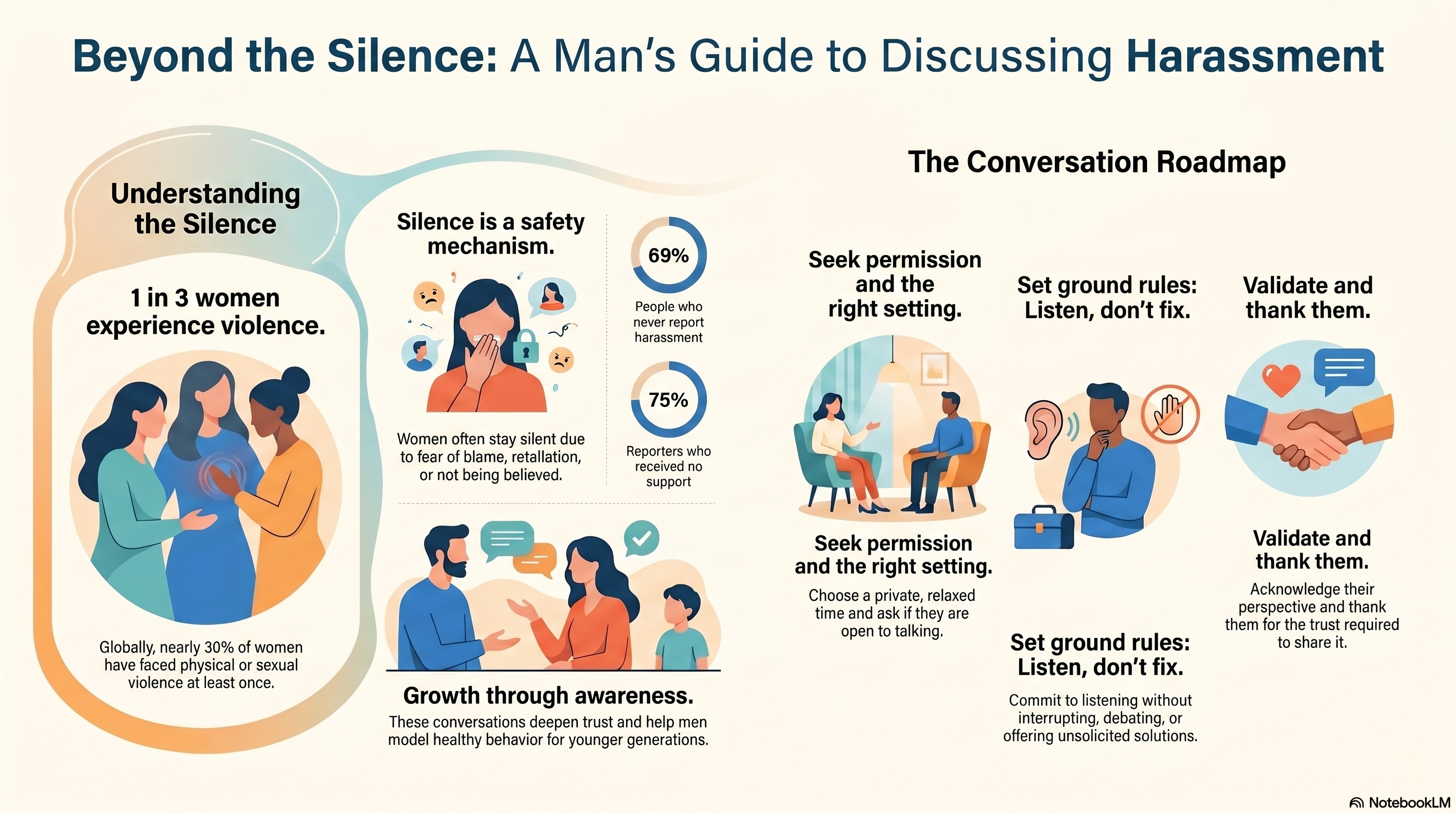
The commuter train scenario. Protect vs Prevent. Default cards. Why "what do you mean by that?" is the most powerful question you can ask.

0:00
deep dive 43:47

Session 2: Full Course Deep Dive

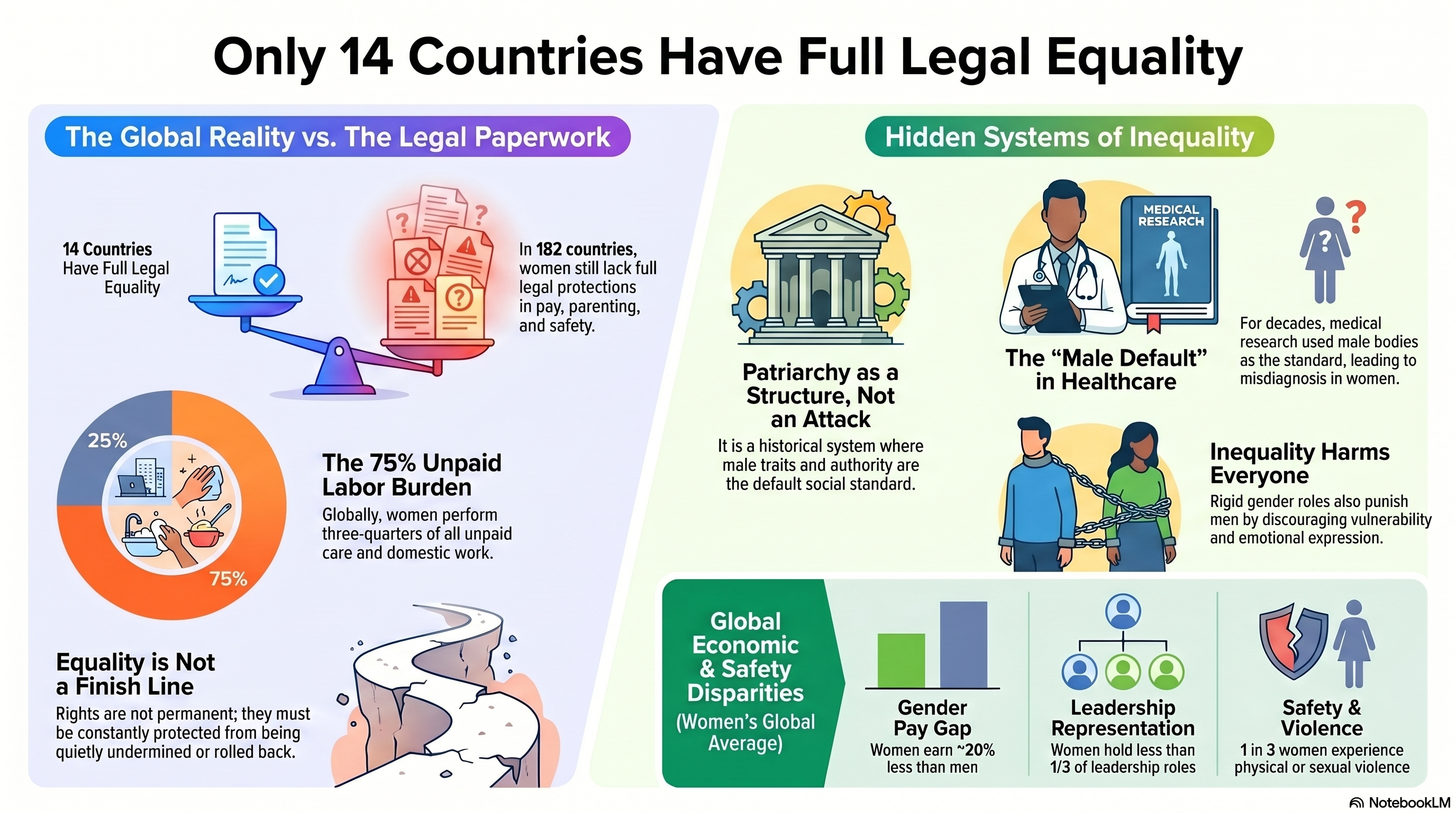
Complete analysis - inner circle trust, the burden of education, ring theory, workplace facilitation, parenting in the algorithmic age, and societal structures.

0:00
// Core Framework
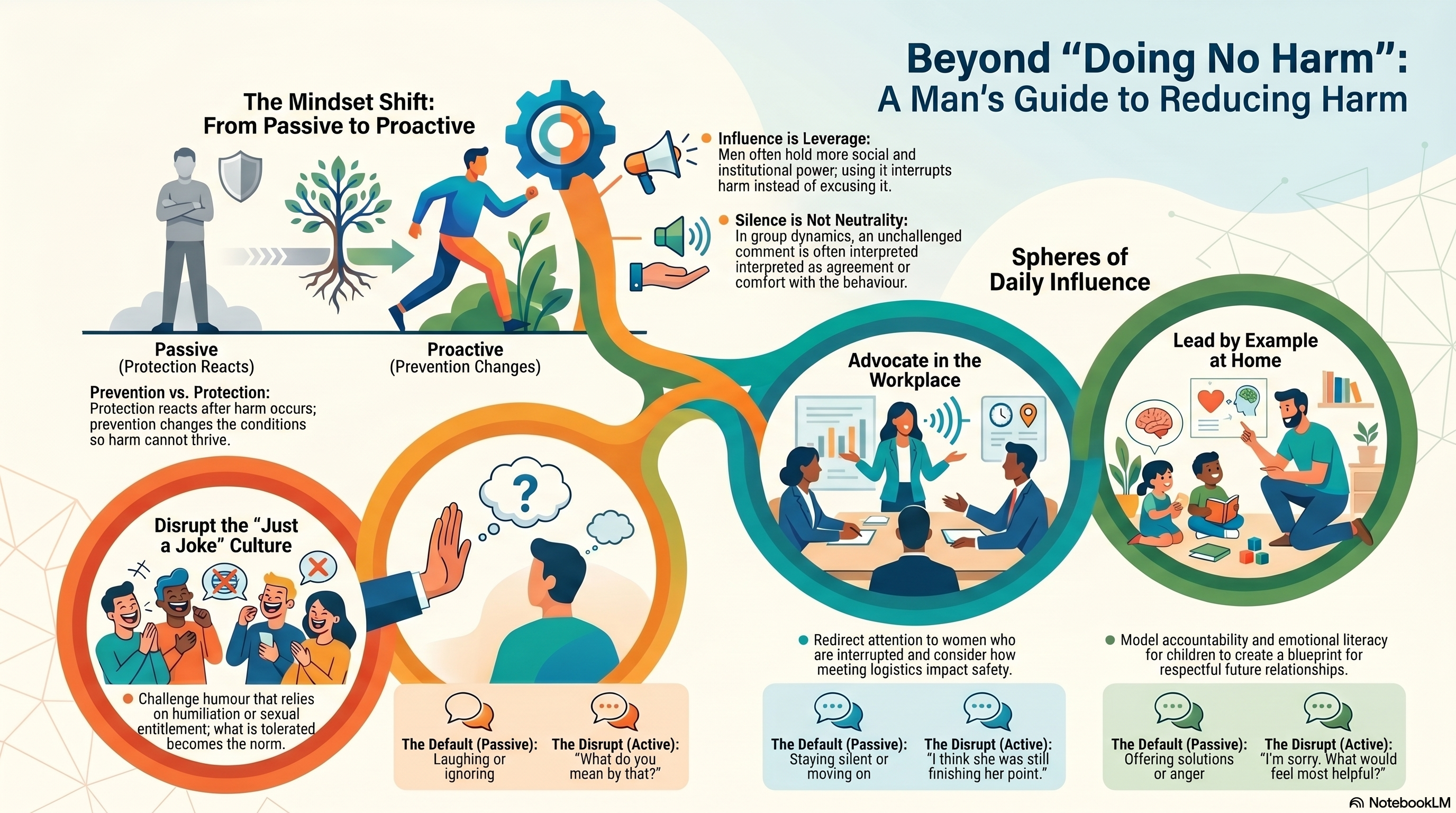
Doing no harm is not the same as reducing harm.
HASSL Course Foundation
🛡
The old model

Protection

Reactive. Assumes harm is inevitable. Requires a male presence for safety to exist. The fire extinguisher approach.

  • Safety depends on someone else being there
  • Responds only after harm has begun
  • Centres the protector, not the person at risk
  • Exhausting - endlessly catching water from a leaky roof
🌱
The HASSL model

Prevention

Proactive. Alters the conditions so harm struggles to materialise. Fixes the plumbing so you never need the buckets.

  • Safety becomes the baseline, not the exception
  • Challenges behaviour before it escalates
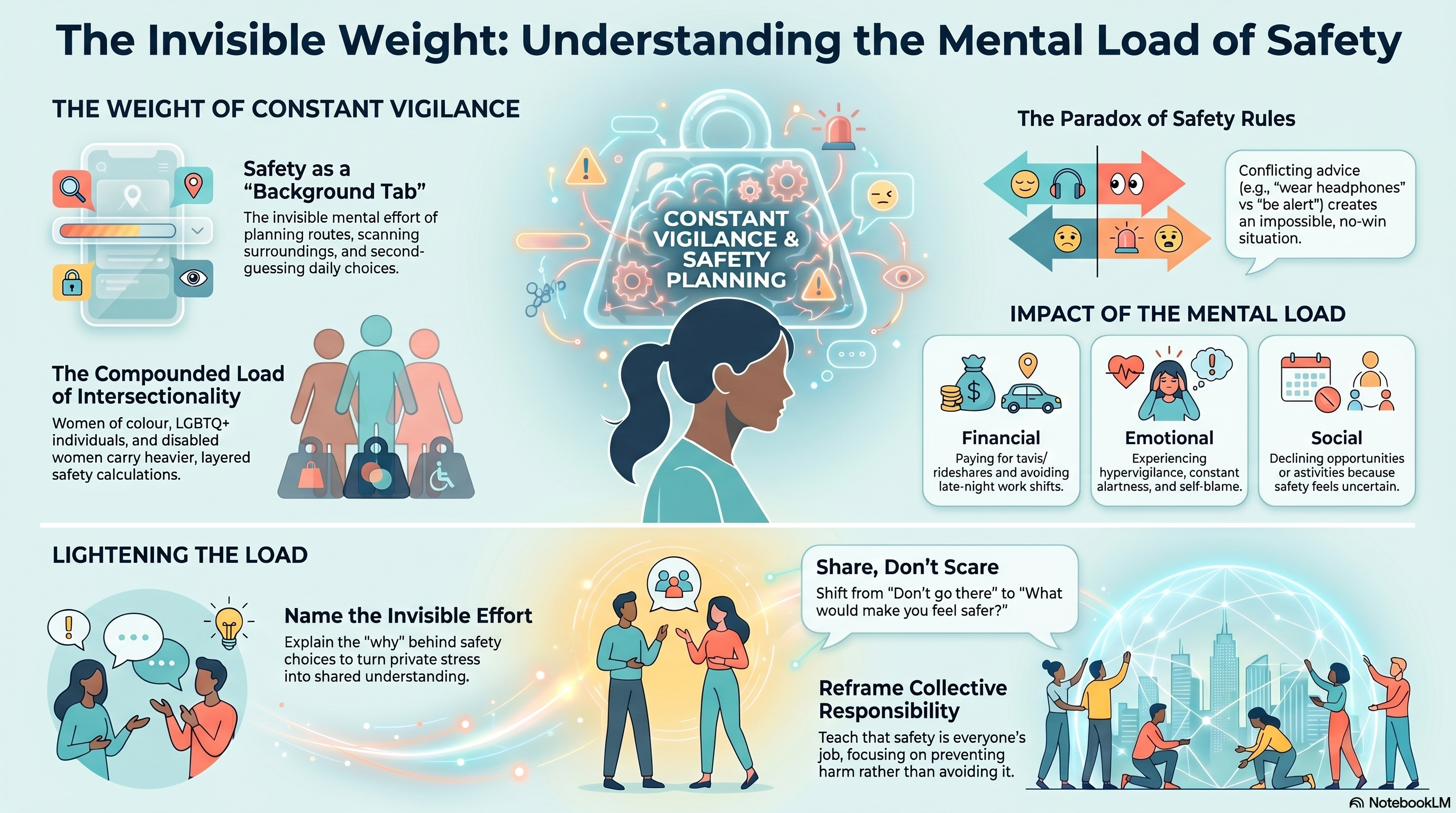
  • Redistributes the cognitive load of vigilance
  • Makes respect the default, not a favour
// Course Modules

Six modules. One shift in perspective.

The training covers every sphere of influence - from your living room to the boardroom to the algorithm shaping your teenager's worldview.

01

Protect vs. Prevent

Understanding why the protector narrative is structurally flawed, and how prevention changes the underlying conditions that allow harm.

foundation
02

Trust in Relationships

How safety is built through consistent mundane actions, not grand declarations. Managing disclosures without centering your own reaction.

inner circle
03

Disrupting Social & Work

Practical tactics for interrupting harmful jokes, redirecting meetings, and adjusting the invisible spatial dynamics of the office.

daily spaces
04

Parenting Next Gen

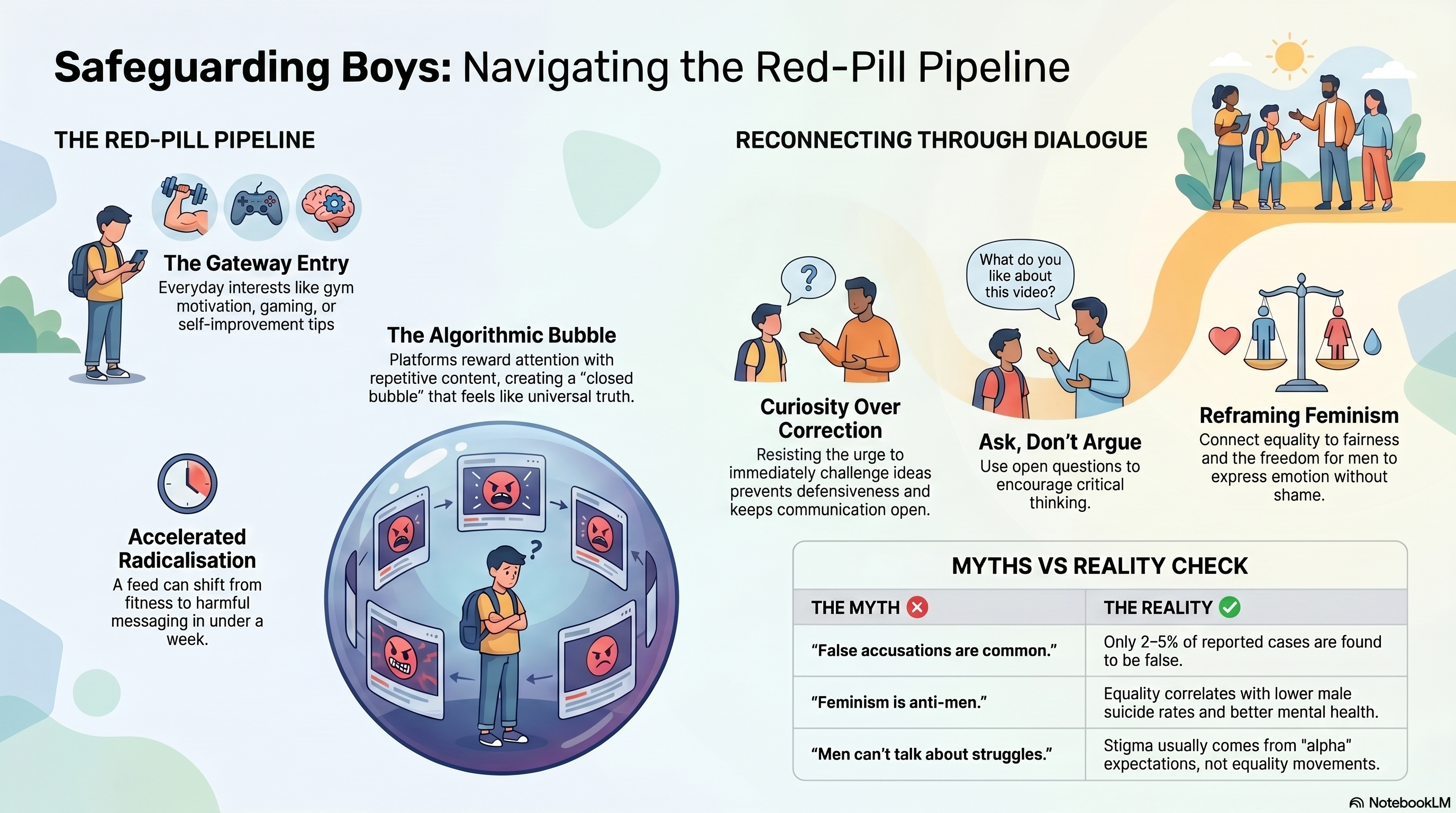
Teaching emotional literacy beyond anger. Making rejection survivable. Raising autonomy over fear. Countering the algorithmic Trojan horse.

legacy
05

Societal Impact

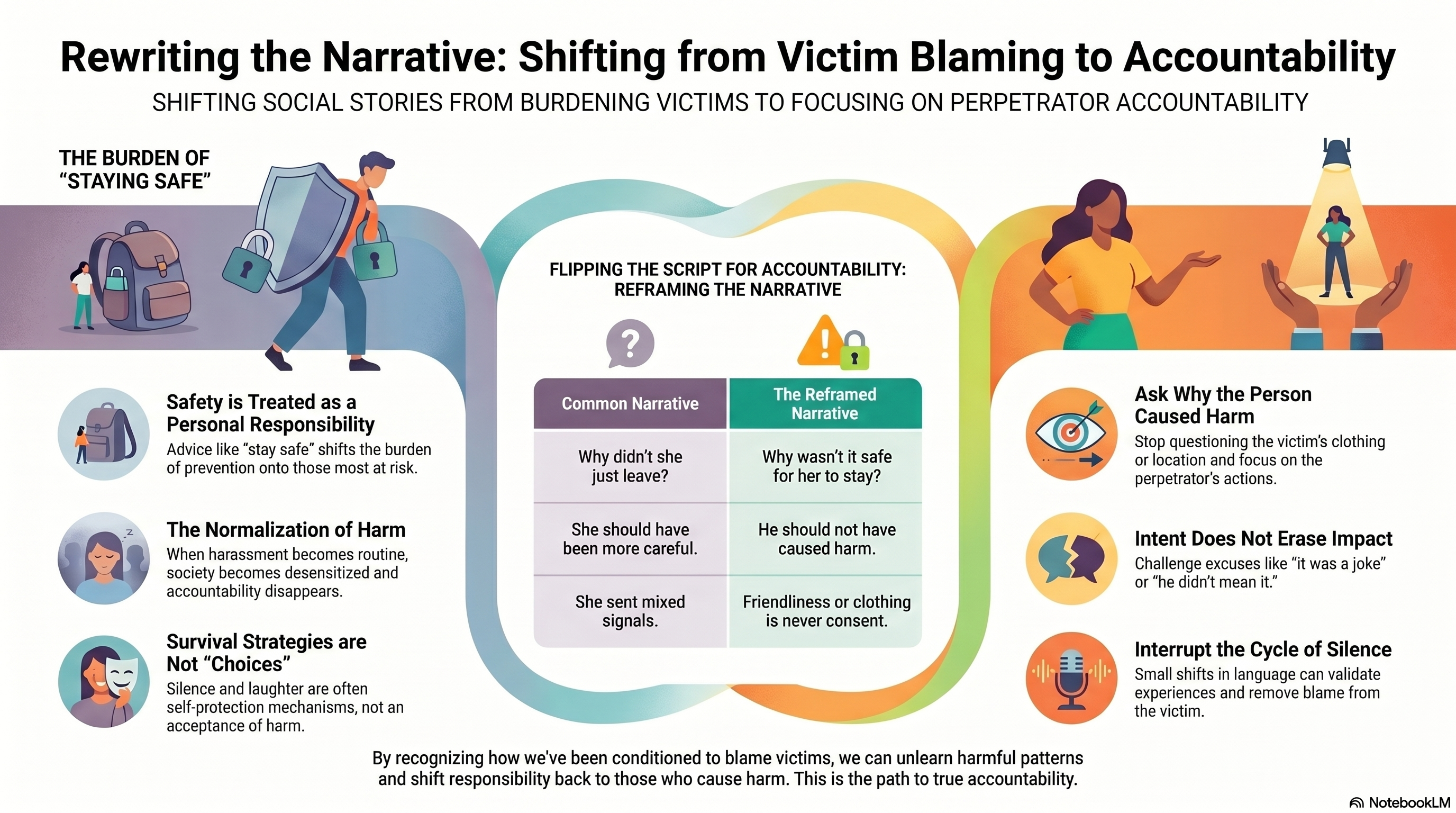
Voting through a structural lens. Challenging victim-blaming media narratives. Understanding ambient risk and public space dynamics.

macro
06

Taking Action

The Default-to-Disrupt toolkit. Real scenario cards. Calibrated disruption techniques for every environment. Earning your certificate.

practice
// Activity Model

The 4-Phase Activity.

Every scenario flows through four phases - from recognising what usually happens to committing to what you will do differently tomorrow.

1

Default

What usually happens. The freeze, the look-away, the "someone else will handle it."

2

Disrupt

What could interrupt the harm. A question, a distraction, a shift in presence.

3

Reveal

Options and explanations. Why this technique works and what it achieves structurally.

4

Ground

What feels doable tomorrow. Concrete, personal commitments anchored in your real life.

// Disruption Toolkit

Six calibrated tactics.

Not confrontation. Not aggression. Cognitive and social friction that interrupts the momentum of harm without escalating risk.

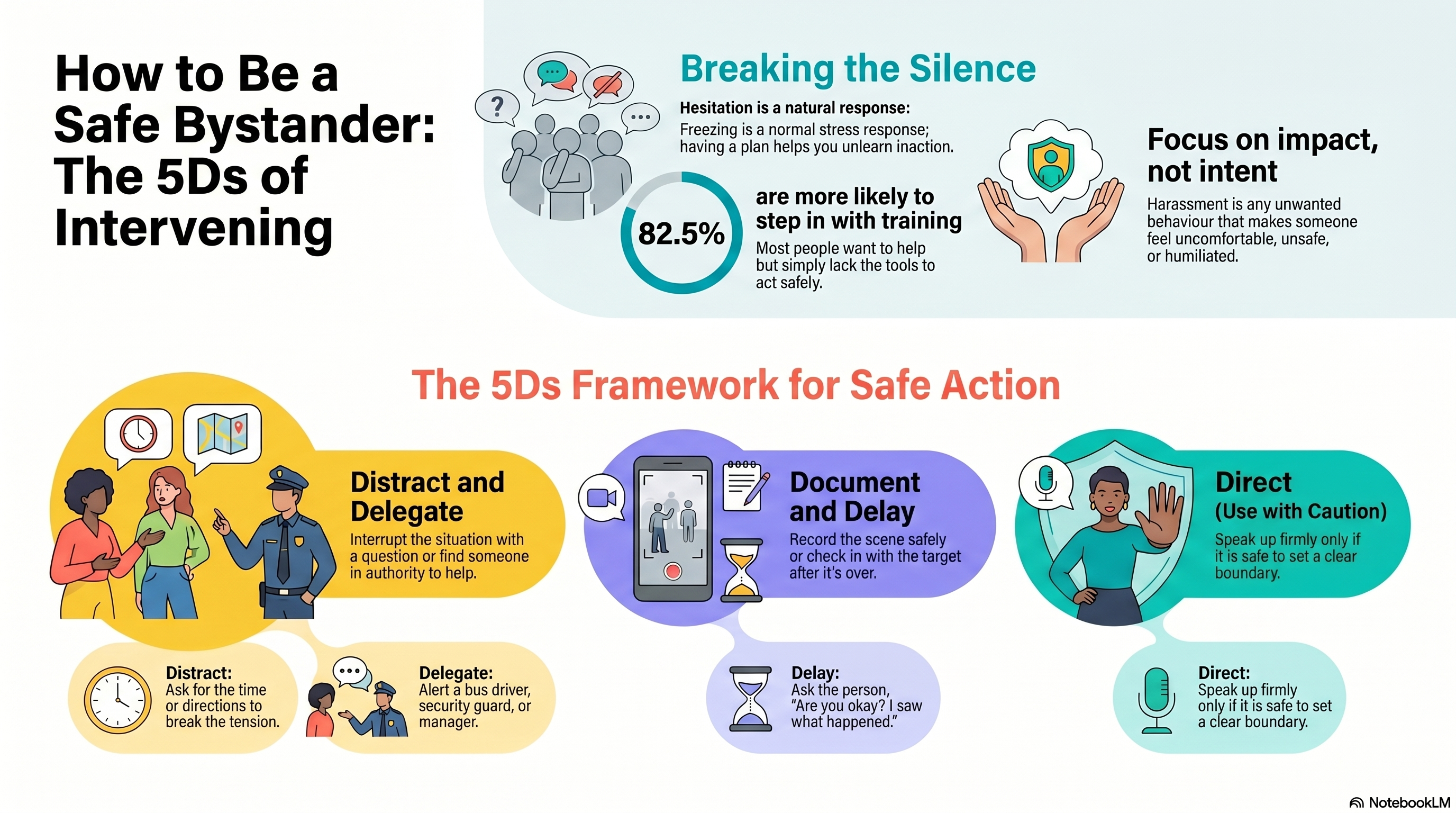
Use a Question

Force the speaker to articulate the unspoken premise. "What do you mean by that?" shatters implied consensus.

🚪

Create an Exit

Offer the target a way out. "The organiser was looking for you" breaks isolation without causing a scene.

🧍

Change Your Presence

Simply move closer. Burst the bubble of isolation the harasser relies on without initiating conflict.

📋

Document

Track patterns with data. "She was interrupted 4 times in 20 minutes" turns feelings into evidence.

🤝

Check In Privately

Validate their reality after the fact. "Are you okay? That looked uncomfortable." Restores agency.

📢

Redirect Attention

In meetings: "I'd like to circle back to what she was outlining." Seamless facilitation, not performative rescue.

// Real Scenarios

Practice with real situations.

Each scenario from the course maps a default reaction to a calibrated disruption, tailored to the environment.

🚈

Crowded commuter train

A man is standing too close, talking at a visibly rigid woman. Create a distraction - ask a mundane question. Change your presence by standing nearby.

public space
🍽

Dinner party joke

Someone drops a misogynistic joke and the table laughs. Use a question: "What do you mean by that?" Force them to dismantle their own premise.

social setting
💼

Workplace meeting

A woman's idea is interrupted and credited to someone else. Redirect attention: "That builds on what she was outlining." Restore credit seamlessly.

workplace
📱

Group chat meme

A degrading meme is shared. Don't engage (feeding the algorithm). Report using platform tools. Check in privately with anyone who may have been affected.

digital
6
Course Modules
4
Activity Phases
6
Disruption Tactics
1hr+
Deep Dive Content
// Take Action

The space between default
and disrupt.
That is where culture changes.

Share the resources. Bring the training to your workplace. Wear the merchandise. Make prevention visible and normal.